
Blogs
Best Time to Visit Paris: Weather, Crowds & Things to Do by Season

There is no single best time to visit Paris, which is an unhelpful answer until you know what the trade-off actually is.
The city runs on a simple exchange, and every article about the best time to visit Paris is really an argument about which side of it you should take. The months with the best weather have the largest crowds and the highest hotel rates. The months with the shortest queues and the cheapest rooms are grey, cold and dark by five in the afternoon. Every recommendation you will read is really an opinion about which side of that exchange matters more.
What this guide does instead is give the numbers for each month, then answer by traveler rather than in general, because the right week for a couple is not the right week for a family with school-age children or for someone flying in to shop.
You will find a month-by-month table, an honest account of each season, the daylight and weather figures that actually shape a day here, the events worth planning around or avoiding, the best time for six different kinds of trip, and how TripsMonster builds itineraries around the season rather than in spite of it.
One thing worth saying at the start: there is no month in which Paris is a bad idea. There are only months in which a particular kind of trip works better than others, and knowing which is which is the point of asking the question before you book.
The Short Answer
If you want one recommendation and no reading, the best time to visit Paris is late April to mid June, or September to mid October.
Those two windows have mild weather, long daylight, everything open, and noticeably fewer people than July and August. They are also not cheap, because plenty of other travelers have worked this out.
If price matters more than weather, the answer changes to February, March or November, which are the quietest months of the year in Paris and the cheapest for hotels.
Daylight Matters More Than Temperature
Most travelers choose their dates on temperature and then get caught out by daylight, which changes far more dramatically here across the year.
In late December the sun sets just before five in the afternoon, which means sightseeing effectively ends at four and the illuminated city takes over. Around the June solstice it stays light until close to ten at night, and a summer evening in Paris is long enough to hold an entire second half of a day.
That single difference reshapes an itinerary. A December day fits two outdoor activities and an evening one. A June day fits four. It is also why the same three-day trip feels rushed in winter and relaxed in summer, regardless of how well it was planned.
Rain, by contrast, is more evenly spread than people expect, at roughly ten to twelve wet days a month all year. No season here is reliably dry, so an indoor option in reserve is worth having in July as much as in November.
Paris Month by Month
| Month | Typical high | Crowds | Prices | Verdict |
| January | 7°C | Low after the 6th | Lowest | Sales, cold, empty museums |
| February | 8°C | Lowest of the year | Low | Best value, grey |
| March | 12°C | Low | Low | Quiet, lengthening days |
| April | 16°C | Rising | Medium | Blossom, unpredictable rain |
| May | 20°C | High | High | Excellent, several public holidays |
| June | 23°C | High | High | Longest days, sales from late June |
| July | 25°C | Very high | Highest | Hot, crowded, Bastille Day |
| August | 25°C | Very high | High | Locals gone, some closures |
| September | 21°C | Medium | Medium | Arguably the best month overall |
| October | 16°C | Medium | Medium | Autumn light, harvest festival |
| November | 11°C | Low | Low | Quietest, Christmas lights from mid month |
| December | 8°C | High from the 15th | High at Christmas | Markets, illuminations, short days |
Rain is fairly evenly spread across the year, at roughly ten to twelve wet days a month, so no season is reliably dry. Daylight is the bigger variable: sunset falls just before five in late December and close to ten in the evening around the June solstice.
Season by Season
Spring, March to May
The season most people picture. Gardens come back, café terraces fill, and daylight stretches past eight in the evening by May. March is still quiet and still cheap, April is the month the city visibly changes, and May is the first month that feels properly like the postcard.
It is also the best season for the day trips, since Giverny’s gardens reopen and the countryside around the city is at its best.
The catch is that April is genuinely unpredictable, capable of twenty degrees and sunshine one day and ten degrees and rain the next, so pack for both. May is more reliable but carries several public holidays that close things and fill hotels, which is worth checking against your dates.
Summer, June to August
Longest days of the year and the fullest calendar, with the city lit until late and the Seine banks busy every evening. Early June is excellent. By mid-July the queues at the major sights are at their annual worst, and anything without a timed ticket becomes a wait rather than a visit.
It is also the most crowded and expensive period, and August has a particular character: many Parisians leave, and a proportion of smaller restaurants and shops close for two or three weeks. The big sights stay fully open, so it affects neighborhood life more than sightseeing.
For families tied to school holidays, summer is often the only option, and it works perfectly well with early starts and booked entry.
Autumn, September to November
September is the month locals quietly recommend, and if the best time to visit Paris had to be a single month for most travelers, this would be it. TripsMonster sees more repeat visitors in September than in any other month, which tells its own story. Summer weather without summer queues, everything open, hotel rates already easing, and the evenings still long enough for a river cruise after dinner.
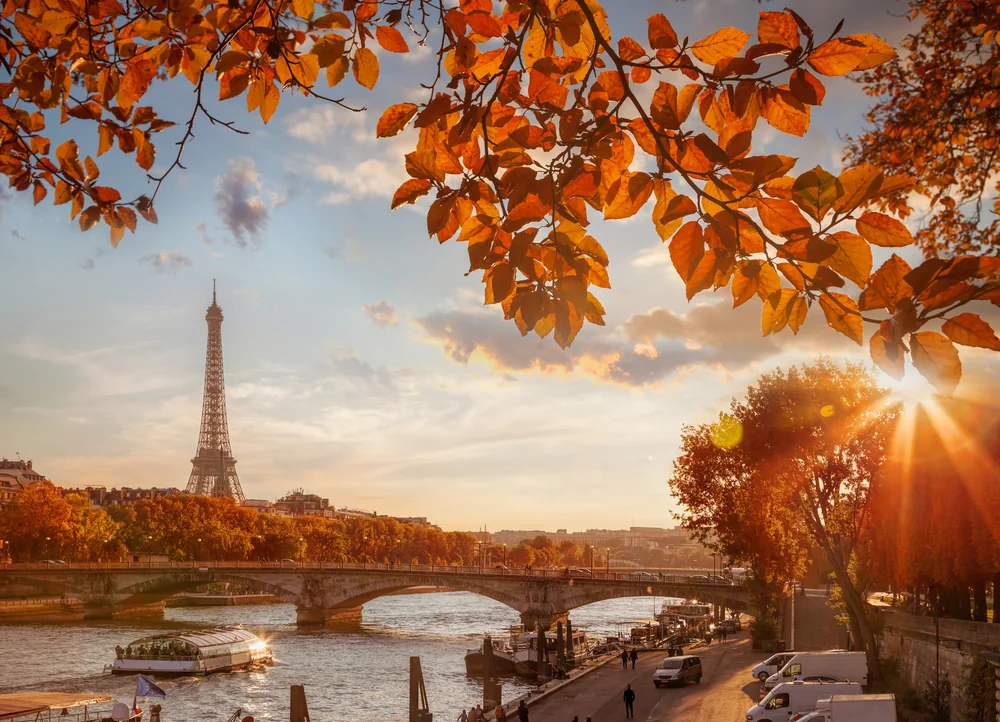
October brings the best light of the year for photographs and the Montmartre harvest festival. November is cold and grey and the quietest month in the city, which makes it the best value of all if you do not mind the weather, and the Christmas illuminations switch on in the second half of it.
Winter, December to February
December splits in two. The first fortnight is reasonable, and from around the 15th the city fills and prices rise sharply through the holiday week, with the markets, illuminations and department store windows at their peak. Our Christmas in Paris guide covers that period in detail.
January and February are the opposite: cold, dark by five, and almost empty. Museum queues effectively vanish, hotels discount heavily, and the winter sales run from early January. For travelers who care more about seeing things properly than about sitting outside, this is a seriously underrated window, and it is the one time of year you can walk into most major sights without a booked slot.
Events Worth Planning Around
Some dates change the character of the city, and a few change the price of it.
14 July, Bastille Day. Military parade on the Champs-Élysées in the morning and fireworks at the Eiffel Tower in the evening. Spectacular, extremely crowded, and many attractions run altered hours.
21 June, Fête de la Musique. Free live music across the whole city on the longest evening of the year, which happens to be one of the best nights to be in Paris.
The sales, early January and late June. The only two periods French law permits real discounting, so anyone travelling to shop should read the dates in our Paris shopping guide before fixing flights.
October, the Montmartre harvest festival. The hill’s working vineyard is celebrated over a weekend, and it is one of the few genuinely local events in a heavily visited district.
Mid-November onwards, the Christmas season. Illuminations, markets and department store windows, running into early January.
Fashion weeks and major conferences. Several times a year, hotel rates spike for a few days without any obvious reason to a visitor. This is the single variable most likely to double a room rate, so it is worth checking dates against the city calendar before booking anything.
The Best Time to Visit Paris For…
A first trip. Late April to mid June, or September. Everything is open, the days are long enough to fit three activities, and the weather rarely dictates the plan. Pair it with our Paris travel tips before you book.
A couple. September or early October, when the light is best and terraces are still comfortable in the evening. Our guide to the most romantic things to do in Paris works in any season, but autumn suits it best.
Families. Late June or early September, at the edges of the school holidays rather than the middle. If your dates are fixed by term time, July and August are manageable with early starts and prebooked entry, as covered in our guide to Paris with kids.
A tight budget. February, March or November. Hotel rates are at their lowest, queues are short, and the difference against July is larger than every other saving combined, including everything you could cut from daily spending. See our guide to Paris on a budget.
Photography. October for autumn light and long golden hours, or December for the illuminations, when blue hour falls conveniently at five in the afternoon rather than at ten at night as it does in June.
Shopping. Early January or late June, the only two periods when French law permits real discounting. Dates and details are in our Paris shopping guide.
Periods Worth Avoiding, and Why

The week between Christmas and New Year. Beautiful and the most expensive week of the year, with queues at everything and hotels at peak rates. Go in early December instead for the same decorations at two thirds of the price.
Mid-July to mid-August. Hottest, busiest and priciest. Manageable, but you will queue for things that have no queue in September. August also brings a quirk worth knowing: many Parisians leave the city, and a share of smaller restaurants, bakeries and independent shops close for two or three weeks. The major sights are unaffected, so it changes the texture of a neighbourhood evening rather than the sightseeing itself, but it surprises visitors who expected the city at full strength.
Fashion weeks and major events. Hotel rates spike sharply for a few days at a time, several times a year. Check your dates against the city calendar before booking flights, because it is the one variable that can double a room rate without warning.
Any Monday or Tuesday without checking. Not a season, but the most common wasted day of any trip: the Louvre closes on Tuesdays and Versailles on Mondays, and 25 December and 1 May close almost everything in the city.
How TripsMonster Plans Around the Se
The same itinerary does not work in February and July, and the difference is not just what you wear. Choosing the best time to visit Paris is only half the decision; the other half is building the days to suit the month you chose.
In winter, the plan follows the light: outdoor sights before four, illuminations after five, and indoor options such as the Louvre or the Catacombs held in reserve for rain. In summer it inverts, with early starts to beat both the heat and the queues, a slower middle of the day, and the best hours saved for the evening when the city stays light until ten.
Autumn and spring need the least management, which is most of why they are recommended so often.
Season also decides what is worth booking. In July, Prebooked Tickets and With Reserved Access are the difference between seeing the Eiffel Tower and looking at it. In February, you can be considerably more relaxed, and a good operator will tell you so rather than sell you a package you do not need.
TripsMonster is based in Paris rather than selling France from abroad, which is why an itinerary can be rebuilt the same morning when a forecast turns, in any month. Whenever you come, the tours page lists everything with dates you can book directly, from Eiffel Tower tours and Versailles to a Seine cruise or a day trip. Send your dates through Custom Your Trip or to info@tripsmonster.com and the itinerary comes back built for that month, including which days to keep free in case the weather turns.
Frequently Asked Questions
What is the best month to visit Paris?
September, for most travelers. Summer weather without summer crowds, everything open, and hotel rates already falling from their peak. Late April to mid June is the close second.
What is the cheapest time to visit Paris?
February, March and November. Hotel rates are at their lowest, museums are quiet, and the difference against July is larger than any other saving you can make on a trip.
Is Paris worth visiting in winter?
Yes, particularly in December for the markets and illuminations, and in January and February if you want the museums almost to yourself. Days are short and grey, so plan outdoor sights before four in the afternoon.
When is Paris least crowded?
February is the quietest month, followed by March and November. Within any month, early mornings before ten are dramatically quieter than the middle of the day at every major sight.
How many days should I spend in Paris?
Four to five for a first trip: two days for the centre, one for Versailles or Disneyland Paris, and one kept free for a day trip or for whatever you want to see twice.
Is August a bad time to visit Paris?
Not bad, but not ideal. The major sights stay open and busy, while some smaller restaurants and shops close for a few weeks as Parisians take their holidays. Expect heat, crowds and high prices.
Can TripsMonster advise on the best dates for my trip?
Yes. Send the months you are considering and what you want out of the trip, and the answer comes back with the trade-offs for each, before anything is booked.
Conclusion
The best time to visit Paris depends entirely on which compromise you are willing to make. Choose May, June or September for weather and long days, and accept the crowds and the prices. Choose February, March or November for space and value, and accept the grey.
The two things worth avoiding are the week between Christmas and New Year, when everything costs the most and queues the longest, and arriving in high summer without a single timed ticket booked.
If you would like the choice made against real dates rather than averages, send your options to TripsMonster or call +33 6 22 35 95 91, and you get an honest answer about which month suits the trip you actually want.